Mobile Money Interoperability in Nigeria: The Technical Reality
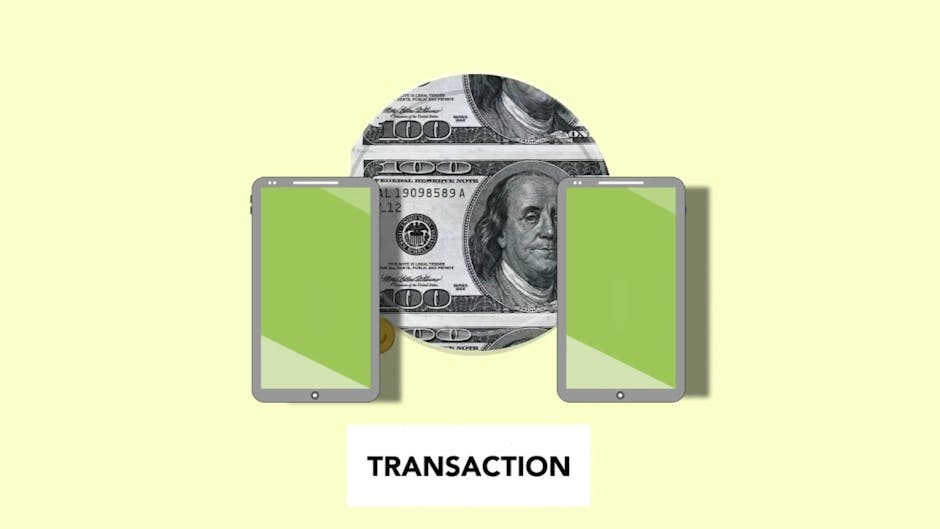
The State of Mobile Money in Nigeria
Nigeria processes more mobile money transactions annually than most African countries see in a decade. By 2023, platforms like Opay, Moniepoint, Palmpay, and the traditional telecom wallets (MTN Mobile Money, Airtel Money) were collectively moving over ₦30 trillion through non-bank channels. Yet despite this scale, a user on Opay sending money to someone on MTN Mobile Money still encounters friction: either a delay while the transfer routes through the banking system, or they must navigate separate interfaces entirely.
This fragmentation exists not because of technical incompetence, but because interoperability in Nigeria's mobile money space was never architected from the start. Each platform was built as a closed ecosystem—a rational business decision in a market where customer acquisition and retention were the primary competitive battlegrounds. The CBN's recent push toward real interoperability, however, has forced a reckoning.
Understanding Nigeria's Regulatory Interoperability Framework
The Central Bank of Nigeria's 2021 Regulatory Framework for Mobile Money Services set the stage, but the real teeth came with the 2023 Cash-less Policy guidelines and subsequent CBN circulars explicitly mandating interoperability between licensed Mobile Money Operators (MMOs) and between MMOs and banks.
Where it matters most: payment switches. Nigeria's existing fintech rails depend heavily on NIPCo (Nigerian Inter-bank Payments and Clearing Company), which handles Immediate Gross Settlement (IGS) transfers between banks and some MMOs, and Interswitch, which powers card-based transactions. But NIPCo wasn't built for real-time MMO-to-MMO transfers at scale. The CBN's emerging requirement is that larger MMOs implement what's called the Payments Layer, a standardised technical foundation that allows wallet-to-wallet transfers without routing through the banking system.
This is where regulation meets infrastructure cost. An MMO in Lagos implementing true interoperability must invest in API gateways, real-time settlement engines, and customer authentication systems that can securely verify identities across multiple platforms—all while maintaining the sub-100-millisecond latency expectations users now have.
The Technical Architecture Behind Interoperable Transfers
At its core, mobile money interoperability requires three technical components: a standardised communication protocol, a neutral settlement layer, and mutual customer identification.
On the protocol side, most Nigerian MMOs now support ISO 20022-compliant messaging for large transactions, and USSD-based fallback systems for feature phones. But the real bottleneck is the settlement layer. When Opay sends ₦50,000 to Moniepoint, the question isn't how fast the message travels—it's how both platforms trust each other's balance assertions, and how the underlying cash collateral is moved between operator accounts at the central bank.
Currently, most true interoperable transfers in Nigeria still clear through the banking system. An MMO in Abuja receives an interoperability request, debits the sender's wallet, then initiates a same-day ACH transfer to the receiving MMO's bank account. The receiving MMO credits the recipient only after the bank settlement confirms—typically within 2–4 hours. This is why a user sees their money leave Opay instantly but arrives at Moniepoint later.
Full technical interoperability—where both wallets are debited and credited in near-real time without banking intermediaries—requires what's called a "prefunded" model. Each MMO maintains a settlement account with a central clearing house (currently still being built out), and transfers between them happen at the clearing house level within minutes. Moniepoint and Opay have begun pilot arrangements with NIPCo to test this model.
Real Constraints: Data, Fraud, and Scale
Interoperability sounds straightforward in theory. In practice, three technical realities complicate it across Nigeria.
First, identity verification at scale. Nigeria's BVN (Bank Verification Number) system works for banks, but MMO users aren't always BVN-verified. A Moniepoint user in Port Harcourt might be verified only against a phone number and a local ID, while an Opay user in Ilorin might have a BVN. When these two users try to exchange money through an interoperable channel, the receiving platform must trust the sending platform's identity assertion—or demand fresh verification. The CBN's push for NIBSS-harmonised identity standards helps, but implementation across dozens of operators is slow.
Second, fraud prevention becomes exponentially harder. A single operator can implement heuristics—flagging a ₦2 million transfer from a first-time user—quickly. But in an interoperable system, that risk logic must be computed across platforms before settlement. If Moniepoint's fraud engine rejects a transfer that Opay already debited, reconciliation becomes messy. Most operators have solved this through conservative daily/monthly limits on interoperable transfers (typically ₦500,000 to ₦2 million per day), which slows adoption.
Third, the technical infrastructure in Lagos data centres can't absorb the load yet. During peak hours—lunch time, market days, or salary days—MMOs already report latency in their own systems. Adding interoperability traffic to NIPCo's systems was tested in 2023, and CBN reports showed a 15–20% slowdown in settlement times on high-volume days. Scaling this requires investment in redundant switching infrastructure, which no single operator wants to fund alone.
Who Benefits and Who Bears the Cost
Interoperability is not neutral. Winners include users and downstream businesses. A small trader in Kano can now receive payments from customers across all major MMO platforms and withdraw to a single bank account without managing separate wallets. A B2B payment service that integrates Opay, Moniepoint, and Palmpay APIs can offer genuinely seamless remittance collection.
But operators and platforms bear the cost. Implementing interoperable payment channels requires new API development, fraud modelling, settlement infrastructure, and regulatory compliance—costs that run into tens of millions of Naira for each operator. Smaller MMOs, which lack the engineering depth to build these systems, will likely be forced into partnerships or consolidation.
The CBN's interoperability mandate also compresses operator margins. Previously, a ₦100 transaction on Opay might net the operator ₦2 in processing fees. With interoperability, that same transaction now routes through a settlement network where fees are lower and shared across parties. An operator handling ₦5 billion in daily interoperable volume loses hundreds of millions in monthly revenue compared to a closed ecosystem.
This is why we're seeing consolidation: larger platforms absorbing smaller ones, and why some operators are betting on niche markets (Kuda on salaried workers, Palmpay on traders) rather than competing head-to-head on interoperability.
What Comes Next: Technical Roadmap
The CBN has signalled that full, real-time interoperability—transfers settled outside the banking system in under five minutes—should be live across all licensed MMOs by Q1 2025. This requires completion of what's now called the "Interoperable Payments Platform" (IPP), a neutral switching and settlement infrastructure that MMOs connect to rather than each other.
The technical architecture is sound: each MMO maintains an IPP node (API gateway), settles through a dedicated bank account at the CBN, and uses ISO 20022 messaging for all interoperable transactions. Pilot testing with a handful of operators is underway, and the CBN has set performance standards: 99.9% uptime, sub-100-millisecond API response times, and fraud detection that must flag suspicious patterns within 500 milliseconds.
But this timeline assumes three things hold: that funding for the IPP infrastructure is released on schedule (the CBN and NIPCo are handling this), that operators prioritise development resources toward integration (many still have legacy systems that need rearchitecting), and that the regulatory expectations remain stable (recent shifts in how NDPA licenses are classified have already caused one integration delay).
For businesses that depend on payment reliability—a fintech in Lagos clearing daily settlements, an e-commerce platform moving money between vendors across Nigeria—waiting for full technical interoperability to mature is not viable. Many are taking a pragmatic approach: building redundancy across multiple platforms, using APIs that are already stable, and maintaining backup settlement routes through traditional banks. This mirrors the approach outlined in our piece on Why Lagos Fintechs Are Moving to Real Cloud Infrastructure—the infrastructure must be reliable before scale matters.
Building on Uncertain Infrastructure
Nigeria's mobile money interoperability is genuinely improving, but it remains technically unfinished. Users will continue to experience delays, operators will maintain conservative transaction limits, and businesses relying on this infrastructure must plan around volatility.
For teams building payment systems or money movement features, the reality is that full interoperability won't be a solved problem in 2024. What you can depend on is the CBN's commitment to mandating it, the technical competence of newer platforms like Moniepoint to build compliant systems, and the likelihood that within 18 months, interoperable transfers at volumes under ₦100,000 will be functionally reliable.
If you're architecting payment flows across multiple MMO platforms or need to understand which settlement routes will actually work for your use case, this is precisely the kind of infrastructure decision that benefits from hands-on technical audit. KorabTech has worked with fintech platforms across Lagos, Abuja, and Port Harcourt to map out realistic payment rails and set integration priorities based on actual platform reliability rather than regulatory timelines—often surfacing the gaps between what MMOs claim and what they can deliver at scale.
Why work with KorabTech? We're a Lagos-based team that builds and ships real, production systems for Nigerian and West African businesses — not pilots, not proof-of-concepts. If what you just read sounds like a problem your business is facing, we'd genuinely like to talk it through with you.